Drain Clearing vs. Drain Cleaning
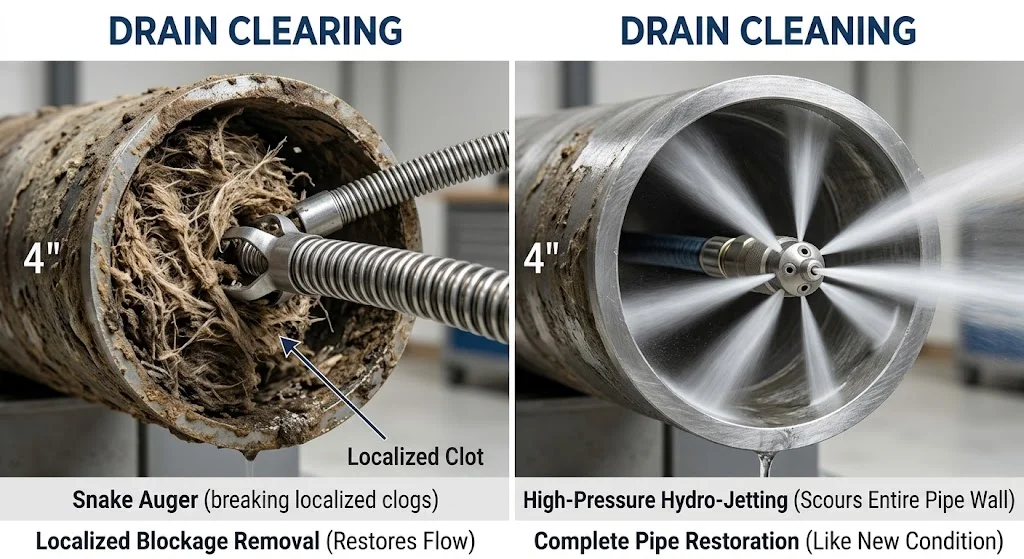
Your kitchen sink is draining slower than it used to, so you call a plumber and ask for "drain cleaning." Someone shows up, runs a cable through the pipe, and the water flows again. Three weeks later, the sink is backing up again, and now you're wondering whether you paid for the wrong service.
This happens more often than most homeowners realize, and it usually isn't anyone's fault. The plumbing industry uses "drain clearing" and "drain cleaning" as if everyone already knows the difference, and most people don't. When you pick the wrong fix, you pay twice: once for the quick repair that didn't last, and again for the real solution. Meanwhile, grease and sludge keep growing inside the pipe.
The good news is that the difference is simple once someone explains it plainly. Drain clearing removes a blockage to get water moving again, while drain cleaning removes the buildup coating the inside of the pipe. In this guide, we'll walk through what each service involves, how to tell which one you need,
The Short Answer: Clearing Fixes a Clog, Cleaning Fixes the Pipe
Drain clearing is about the obstruction. A wad of hair, a clump of food, a toy, or a mass of wipes is stopping water, and the goal is to break it up or pull it out so the drain works again.
Drain cleaning is about the pipe itself. Over months and years, grease, soap residue, sludge, and mineral scale cling to the pipe walls and slowly shrink the opening that water has to pass through.
A helpful comparison is a clogged artery versus a narrowed one. Clearing removes the one big plug, but cleaning restores the full width of the pipe so plugs are less likely to form in the first place.
What Is Drain Clearing?
Drain clearing is the process of removing a specific obstruction so wastewater can flow through the pipe again. It is a targeted fix. The plumber (or you, with a plunger) finds the blockage, breaks it apart or pulls it out, and checks that water drains properly afterward.
Most clogs that call for clearing come from everyday household items. In bathrooms, that's usually hair tangled with soap scum. In kitchens, it's food particles, coffee grounds, and cooking oil that cooled and hardened. In toilets, it's too much toilet paper or items that never belonged there, like wet wipes and "flushable" products that aren't truly flushable.
The tools for drain clearing are mechanical. A plunger uses pressure to dislodge a minor clog near the fixture. A drain snake (also called a drain auger) is a flexible cable that feeds into the pipe and either breaks up the blockage or hooks it so it can be pulled out. For tougher or deeper obstructions, plumbers use a motorized drain snake, and for toilets, a toilet auger is designed to get past the bend without scratching the porcelain.
Drain clearing is usually quick, and it's the right call when the problem is sudden and isolated. If one shower drain stopped overnight after a bad hair day, you almost certainly have a localized clog. The limitation is that clearing opens a hole through the blockage, but it doesn't remove the layer of residue the clog was clinging to.
What Is Drain Cleaning?
Drain cleaning is the process of removing accumulated buildup from the inside walls of a drainpipe. Think of it as scrubbing the pipe, not just poking a hole through it. The goal is to restore the pipe's full interior diameter and to reduce the chance of future blockages.
What builds up inside pipes depends on where the pipe leads. Kitchen lines collect grease and cooking oil, which cool, stick to the pipe wall, and trap food particles. Bathroom lines gather soap scum, hair, and body oils. Older pipes, especially cast iron, can develop mineral deposits and rough corrosion that give debris something to catch on. Over time all of this forms sludge, a dense, smelly layer that narrows the pipe long before a full clog appears.
Professional drain cleaning uses stronger methods than a household plunger or hand snake. Hydro jetting sends high-pressure water through a specialized nozzle to scour grease, sludge, and debris off the pipe walls and flush it downstream. Mechanical cleaning uses rotating cables with cutting heads to scrape away buildup. Descaling targets hard mineral deposits. A sewer camera inspection often comes first, so the plumber can see the pipe's condition before choosing a method.
This is why drain cleaning is often described as maintenance. You'd typically choose it when clogs keep coming back, when several drains are slow at once, or when the pipes smell no matter how often you clear them. If you want a deeper look at the service itself, our complete guide to drain cleaning covers the process step by step.
Drain Clearing vs. Drain Cleaning: Key Differences
The table below puts the two services side by side so you can see where they differ.
Feature | Drain Clearing | Drain Cleaning |
Main purpose | Remove a blockage | Remove buildup from pipe walls |
Main goal | Restore water flow | Restore the pipe's interior |
Typical tools | Plunger, drain snake, auger | Hydro jetter, rotary cutters, descaling tools |
Best for | A single, sudden clog | Recurring clogs, slow drains, odors |
Camera inspection | When the cause is unclear | Often recommended first |
Long-term effect | Depends on what caused the clog | Helps reduce buildup-related clogs |
The most useful takeaway from this table is the "best for" row. If the problem is one fixture and it happened suddenly, think clearing. If the problem keeps returning or affects more than one drain, think cleaning.
Why the Two Terms Get Mixed Up
The industry doesn't use these words the same way everywhere, and that's part of the confusion. Some plumbing companies say "drain cleaning" for everything, including a basic snake job. Others reserve "drain clearing" for emergency blockage removal and "drain cleaning" for scheduled maintenance.
The tools overlap, too. A motorized cable with a cutting head can clear a clog and also scrape away some buildup. Hydro jetting is mainly a cleaning method, but a plumber may also use it to break through a stubborn blockage.
Because of this, don't rely on the name alone when you call a plumber. Describe what's happening ("one sink, sudden" or "every drain is slow and smells"), and ask what method they plan to use and why. A good plumber will happily explain, and that conversation tells you more than the service label does.
Signs You Need Drain Clearing
You likely need drain clearing when the problem is sudden, local, and limited to a single fixture. The pipe was working fine until recently, and now one drain is slow or completely stopped.
Common examples include a kitchen sink that backed up after a heavy meal prep, a shower that stopped draining after a clump of hair built up, or a toilet that clogs and clears with a plunger but won't flush properly. In each case, other drains in the house still work normally, which tells you the main sewer line is probably fine.
It's worth trying a plunger first for sinks, tubs, and toilets, because many minor clogs clear with a few firm, steady pushes. If the plunger doesn't work after a few honest attempts, a plumber's snake or auger is the next step. Avoid forcing a cable down the pipe yourself if you're unsure what's down there, since a scratched or punctured pipe is more expensive than the original clog.
Signs You Need Professional Drain Cleaning
You likely need drain cleaning when the problem keeps coming back or shows up in several places at once. These patterns suggest buildup coating the pipe walls rather than a single obstruction.
Watch for these signals:
• Recurring clogs in the same drain, even after clearing
• Multiple slow drains at the same time
• Gurgling sounds from drains or toilets after water runs
• Foul odors that return no matter how often you clean the fixtures
• Standing water in a tub, shower, or floor drain
• Water backing up into other fixtures when you run the washer or dishwasher
A gurgling drain deserves special attention. That sound usually means air is struggling to pass a restriction in the line, and it's often an early warning that buildup or a partial blockage is developing. If your drains also smell bad, our article on why drains smell and how to fix it explains what's happening inside the pipe.
A Simple Three-Question Test
You can narrow down which service you need by asking three questions before you pick up the phone.
1. How many drains are affected? One points to clearing. Several point to cleaning or a main line problem.
2. Has this happened before? A first-time clog is often just a clog. A repeat problem suggests buildup.
3. Is there a smell or gurgle? Odors and sounds usually mean residue inside the pipe, not just a blockage.
If you answer "one drain, first time, no smell," start with clearing. If you answer "several drains, again, and it smells," ask about cleaning and a camera inspection. This isn't a diagnosis, but it gives you the right words to use when you talk to a plumber.
Drain Snaking vs. Hydro Jetting
Snaking and hydro jetting are the two methods homeowners hear about most, and they do different jobs. A drain snake pushes a cable into the pipe, then breaks up or catches the blockage. It's fast, affordable, and ideal for localized clogs, but it generally opens a channel through the obstruction rather than cleaning the pipe's entire interior.
Hydro jetting uses pressurized water delivered through a nozzle that sprays forward and backward inside the pipe. The water scours the walls, cuts through grease and sludge, and pushes debris out of the line. It's thorough, and it's especially useful for kitchen lines and main sewer lines that have collected years of residue.
Neither method is automatically better. Snaking is the efficient choice for a single clog, and hydro jetting is the stronger choice for buildup. Many plumbers use both in one visit: snake first to open a fully blocked line, then jet to clean it.
A common question is whether snaking cleans the whole pipe. It doesn't, which is exactly why a snaked drain can slow down again within weeks. If you'd like a deeper comparison, we break it down in hydro jetting vs. traditional drain cleaning.
Can Hydro Jetting Damage Your Pipes?
Hydro jetting is safe for most healthy pipes when a trained plumber controls the pressure and inspects the line first. The risk comes from using it blindly on pipes that are already weak. That's why a reputable plumber won't jet every drain automatically, and why you should be cautious of anyone who does.
Pipe material matters here. PVC and ABS are the two common plastic drain pipes in newer homes, and they handle jetting well when the joints are sound. Cast iron was widely used in older homes and can corrode on the inside, creating a rough, flaky surface. Jetting can clean that scale, but a severely deteriorated cast iron pipe may need repair instead of aggressive cleaning.
Damage to the line also changes the plan. Cracks, offset joints, and collapsed sections can't be fixed by cleaning, and high-pressure water may make a weak spot worse. Pipe diameter and age also influence which nozzle and pressure setting make sense.
This is the reason camera inspection matters so much. A sewer camera lets the plumber see roots, cracks, scale, and grease before choosing a method, so the decision is based on what's really inside your pipe.
Why Camera Inspection Comes Before the Big Decision
A sewer camera inspection turns a guess into a diagnosis. A small waterproof camera on a flexible cable travels through the pipe and sends live video to a screen, so the plumber can see exactly where the problem sits and what's causing it.
The footage can reveal several things that change the recommendation:
• Grease and sludge coating the walls, which points toward cleaning
• Tree roots entering through joints, which may need a cutting head, followed by cleaning
• Scale and corrosion inside older pipes, which may require descaling or repair
• Belly or sag in the line where water pools, which cleaning can't fix
• Foreign objects lodged in the pipe, which clearing can remove
Roots deserve a special mention because they surprise many homeowners. Roots look for moisture and slip into tiny cracks or loose joints in underground pipes. A cutter can remove the root mass, and jetting can clean what's left, but the roots can return if the opening in the pipe isn't repaired. If your plumber shows you root intrusion on camera, ask what the long-term plan is, not just how to clear it today.
If you're thinking about this step for your own home, our drain camera inspection service explains what the process looks like.
Whose Pipe Is It? Your Drain Line vs. the City Sewer
Understanding where your plumbing ends and the city's sewer begins can save you time and money. The City of Chino operates a municipal sewer system and provides wastewater service to residents and some nearby unincorporated areas. Your home connects to that system through a private sewer lateral, the underground pipe that carries wastewater from your house to the main line.
In most places, the property owner is responsible for the private lateral, while the city handles the public main in the street. Rules can vary by property and situation, so it's smart to confirm responsibilities with the City of Chino before assuming.
This matters because a backup in several fixtures at once often points to the main sewer line or lateral rather than a single drain. A sewer cleanout, the capped access pipe usually found outside your home, gives plumbers a direct way to inspect and clean the line without opening up your yard. Knowing where your cleanout is located is helpful in an emergency.
If you notice water backing up into a shower or tub when you run the washing machine, that's a classic sign of a main line problem. Our sewer line cleaning page explains how plumbers approach it.
Why Chemical Drain Cleaners Aren't the Answer
Chemical drain cleaners promise an easy fix, but they carry real tradeoffs. Most work by generating heat or caustic reactions that dissolve some organic material, but they only work on the part of the clog they can reach. If the water stands still above a blockage, the chemical can sit in your pipes and fixtures for hours.
Repeated use can wear on pipe materials and fittings, and the leftover chemicals create a hazard for the next person who works on the drain. That includes a plumber who may be exposed to caustic water while removing a trap or running a cable. If you've already used a chemical product, tell the plumber before they start.
What chemicals can't do is physically scrape grease and scale off pipe walls or pull out a hairball, a toy, or a wad of wipes. For that reason, they tend to be a temporary patch at best. If you find yourself reaching for the bottle every few weeks, that's a sign your pipes need cleaning, not another round of chemicals.
How Much Do Drain Clearing and Drain Cleaning Cost?
Costs depend on the situation, so a fair quote comes after someone understands your problem. Rather than guessing at a number, here are the factors that move the price up or down.
The type and location of the blockage matter first. A clog near a fixture is faster to reach than one deep in a main line. Pipe accessibility also plays a role: easy cleanout access saves time, while a hard-to-reach line takes more effort.
Equipment is the next factor. A basic snake job uses simpler tools than hydro jetting or a camera inspection. The extent of buildup and the pipe's condition influence how long the work takes, and emergency or after-hours service typically costs more than a scheduled visit.
When you request a quote, ask what's included, whether a camera inspection is part of the visit, and what happens if the first method doesn't solve the problem. Clear answers upfront protect you from surprise charges later.
How to Prevent Recurring Drain Clogs
Most recurring clogs are preventable with a few small habits. You don't need to overhaul your routine, just stop the things that build up inside pipes from going down in the first place.
• Keep grease out of the sink. Let cooking oil cool, then pour it into a sealed container and throw it away.
• Use drain strainers in showers, tubs, and kitchen sinks to catch hair and food particles.
• Scrape plates into the trash before washing, and keep coffee grounds out of the drain.
• Throw away wipes. Even products labeled flushable can snag in pipes and sewer lines.
• Flush with hot water after washing dishes to help keep light residue moving.
• Skip routine chemical cleaners, and ask a plumber about maintenance cleaning if drains slow down repeatedly.
Homes with older pipes, large trees near the sewer line, or heavy kitchen use may benefit from periodic professional cleaning. Restaurants and other commercial kitchens face the greatest grease buildup and often schedule regular maintenance. For most single-family homes, an inspection when problems repeat is a sensible rule.
Drain Clearing and Drain Cleaning in Chino, CA
Homes in Chino come with a mix of plumbing ages and layouts, and that variety is why one-size-fits-all advice rarely works. Newer neighborhoods tend to have plastic drain lines, while older homes may still have cast iron or galvanized sections that behave differently. Local water conditions can also affect mineral buildup, and the City of Chino publishes a water quality report if you'd like to understand what's in your supply.
When a Chino homeowner calls us, we start with the symptoms, not a sales pitch. We ask which fixtures are affected, how often it happens, and whether there's an odor or gurgle. From there, we decide whether a quick clearing will solve it or whether a camera inspection and cleaning make more sense.
That approach comes from seeing the same pattern over and over: a quick fix works beautifully when the problem is a single clog, and it disappoints when the pipe is lined with grease. Matching the service to the cause is what saves people from paying twice.
If you'd rather have a professional look before you decide, our team at Chino Drain Pros offers drain cleaning in Chino along with hydro jetting and clogged drain repair. If something can't wait, we also handle emergency drain cleaning. When you're ready, you can reach us at 909-737-6120 or through the contact page, and we'll talk through what you're seeing, no pressure.
what the tools actually do, and how to stop the same clog from returning. If you're dealing with a stubborn drain in Chino, CA, this will help you ask the right questions before anyone touches your pipes.
Frequently Asked Questions
Is drain clearing the same as drain cleaning?
Not exactly, although some companies use the terms interchangeably. Clearing removes a blockage so water flows again, while cleaning removes buildup from the pipe walls. When you call a plumber, describe your symptoms and ask what method they'll use.
Which is better: drain clearing or drain cleaning?
Neither is better in every case. Clearing is the right choice for a sudden, isolated clog, and cleaning is the better choice for recurring problems, odors, and multiple slow drains. Many situations call for clearing first and cleaning afterward.
Does drain snaking clean the entire pipe?
No. A snake typically opens a path through the clog and may remove part of the surrounding material, but it doesn't scrub the full pipe wall. That's why a snaked drain can slow down again if grease or sludge remains.
Does hydro jetting remove grease and tree roots?
Hydro jetting is very effective on grease, sludge, and loose debris. For roots, plumbers often cut the root mass first with a mechanical cutter and then jet the line. Roots can regrow if the entry point in the pipe isn't repaired.
Can hydro jetting damage old pipes?
It can if the pipe is already cracked, severely corroded, or collapsed. That's why a camera inspection is recommended before jetting older lines, especially cast iron. A plumber can then choose a safe pressure or recommend repair instead.
Why do my drains keep getting clogged?
Recurring clogs usually mean something is building up inside the pipe, such as grease, soap scum, scale, or roots. Clearing the clog restores flow but doesn't remove the buildup, so the problem returns. A camera inspection and cleaning can address the cause.
How often should drains be professionally cleaned?
There's no single schedule for every home. Households with older pipes, nearby trees, or heavy kitchen use may benefit from periodic maintenance, while others only need cleaning when symptoms appear. A plumber can recommend an interval after inspecting your lines.
When should I call a plumber for a clogged drain in Chino, CA?
Call when a plunger doesn't solve it, when more than one drain is affected, or when you notice sewage odors or water backing up. Those signs often point to a deeper problem than a simple clog, and waiting can make it worse.