How Does a Drain Cleaning Bladder Work? Step-by-Step Guide
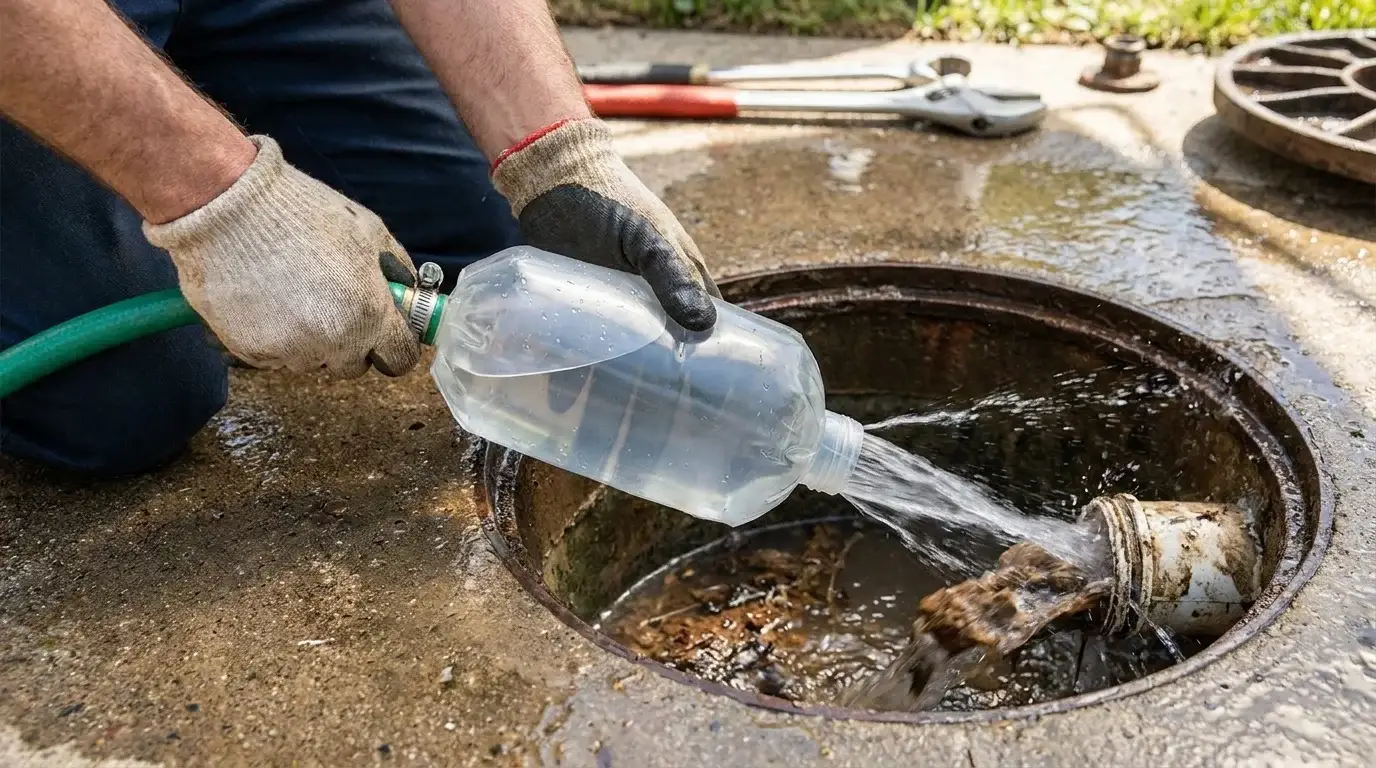
Your sink is full of standing water, you’ve plunged it twice, and a rubber balloon that attaches to a garden hose looks like a cheap, quick fix.
Here is the catch. A drain bladder works by trapping water pressure inside a pipe, and pressure goes wherever the pipe is weakest. In a clean plastic drain, that is the clog. In an aging pipe, it can be a cracked joint behind a wall, a hose that splits open, or a blockage pushed deeper into the line, where it becomes a bigger repair.
This guide explains how a drain cleaning bladder works, which clogs it can clear, when to put it down, and what a plumber does differently, so you can decide before you spend money or damage a pipe.
The short answer
A drain cleaning bladder is a rubber balloon on a garden hose. Water fills it until it presses against the pipe wall and seals. The water then has only one way out: through the open end of the bladder, straight at the clog. That focused force can push soft clogs apart and wash them down the line.
What is a drain cleaning bladder?
A drain cleaning bladder, also called a drain bladder or blow bag, is a flexible rubber tube that screws onto the end of a garden hose. It uses water pressure, not a spinning cable, to move a blockage.
Bladders come in different sizes because pipes come in different widths. A bladder that is too small won’t seal, so water just flows around it. One that is too large can strain the pipe or be hard to insert. Matching the size to the pipe is the first rule.
How a drain cleaning bladder works inside the pipe
The process has three stages.
1. It fills and seals. When you open the faucet slowly, water travels through the hose into the bladder. The rubber expands outward until it presses against the inside of the pipe. That seal stops water from flowing backward past the bladder.
2. Pressure builds behind the clog. With the way back blocked, the incoming water has nowhere to go but forward. The bladder and the hose become a sealed, pressurized system between your faucet and the blockage.
3. Water is forced out the front. The pressure pushes water out of the bladder’s open end onto the clog. Soft material breaks into pieces, and the continuing flow carries them down the pipe.
The important part is that the force doesn’t come from the bladder. It comes from your home’s water pressure, held in one place. That is why the tool can work well in a sound pipe and badly in a weak one: the pipe, joints, and hose all carry that pressure too.
Which clogs can a drain bladder clear?
Bladders work best on soft, loose blockages that pressure can break apart.
| Clog type | Will a bladder help? | Why |
|---|---|---|
| Hair and soap scum | Often | Soft material that breaks up under pressure |
| Grease and food residue | Sometimes | Can loosen a partial clog, but the pipe wall stays coated |
| Leaves and dirt in outdoor drains | Often | Loose debris that washes out |
| Tree roots | No | Roots are woven into the pipe and water doesn’t cut them |
| Cracked or collapsed pipe | No | The pipe is the problem, not what’s in it |
| Solid objects | Rarely | Water can push them deeper instead of out |
When a bladder is the wrong tool
Stop and call a plumber if you see any of these:
- More than one drain is affected. Slow drains in several fixtures usually mean the blockage is in the main line, the large pipe that carries all wastewater out of the house.
- Water rises in another drain while you work. The blockage is farther down than you can reach.
- The clog comes back within days or weeks. Something in the pipe is causing it.
- You smell sewage or see backups. This is the situation our Emergency Drain Cleaning service is for.
- The pipe is old. Cast iron and clay pipes, still common in older homes, can crack under pressure that plastic handles fine.
- The drain has tees or elbows between you and the clog. A tee is a pipe fitting where a drain branches. Water can escape sideways there, so pressure never reaches the clog.
A bladder is also not a good choice for toilets. The curved passage inside a toilet doesn’t suit a straight-pipe tool, and manufacturers warn that it can damage the porcelain.
How to use a drain bladder safely
If you have a soft clog in a single, sound drain, this order reduces risk:
- Check the pipe size and choose the matching bladder. Inspect the rubber and hose for cracks.
- Connect the bladder to a garden hose attached to a cold-water faucet. Never use hot water, which can weaken the rubber.
- Insert it at least six inches into the pipe, past any tee in the line, so it sits fully inside and not at the opening.
- Hold the hose firmly and have someone open the faucet slowly. A sudden surge is how hoses pop out and pipes get stressed.
- Stand to the side, not over the drain, in case dirty water or the hose comes back out.
- Watch nearby drains and the curved pipe under the sink, called the trap. If anything leaks, shift, or rises, shut the water off at once.
- Turn the water off and let the bladder deflate fully before pulling it out. Run tap water to confirm the drain flows.
What can go wrong
- A damaged pipe. Pressure travels in every direction. Weak joints, old pipe, or a hidden crack can give way.
- A burst hose or bladder. The hose becomes part of a pressurized system, so an old one can split.
- A stuck bladder. Rubber can lodge in a bend, and removing it costs more than the original clog.
- A clog pushed deeper. The blockage moves to a narrower spot, and now it’s harder to reach.
- A false sense of a fix. A bladder often clears a narrow channel through the clog while leaving the coating on the pipe wall, so the drain slows again.
Drain bladder vs. plunger vs. snake vs. hydrojet vs. camera
| Tool | How it works | Best for | Limitation |
|---|---|---|---|
| Plunger | Pushes and pulls water at the drain | Simple fixture clogs | Doesn’t reach far |
| Drain bladder | Seals the pipe and forces water at the clog | Soft, partial clogs in sound pipes | Limited control, risk to old pipes |
| Drain snake | A rotating cable that breaks through or snags a clog | Solid or tangled clogs | Can leave residue on the pipe wall |
| Hydrojet | A machine that sprays high-pressure water through a nozzle | Grease, scale, and heavy buildup | Needs professional equipment |
| Camera inspection | A small camera shows the inside of the pipe | Finding the real cause | Doesn’t clear the clog on its own |
What a plumber does differently
A bladder pushes at a clog without seeing it. We start by finding out what we’re dealing with.
For recurring clogs, a camera drain inspection shows whether the cause is grease, roots, a damaged pipe, or a blockage in the main line. Hydrojet drain cleaning then scours the inside of the whole pipe, not just a channel through the clog. When roots are involved, we use tree root removal. If several drains are affected, we clear the main sewer line.
In Chino, older homes often have aging pipes and mature trees nearby, and hard water leaves mineral scale inside pipes that catches hair and soap. Those are the situations where a quick DIY pass is least likely to last.
Drain bladder questions
Can a drain bladder damage pipes?
Yes. It can crack old or fragile pipes, especially cast iron or clay, or stress joints that are already weak.
Does a drain bladder work on a main sewer line clog?
Usually not safely. A blocked main line affects several drains and often involves roots or grease buildup that a bladder doesn’t remove.
Is a drain bladder better than a snake?
They suit different clogs. A bladder is better for soft, partial blockages, while a snake is better for solid or tangled ones.
Why did my drain clog again after using a bladder?
The bladder may have cleared only a narrow channel and left buildup on the pipe walls, or something deeper in the line is causing the clog.
Can I use a drain bladder with hot water?
No. Hot water can weaken the rubber, so use cold water only.
Not sure what’s in your pipe? Ask us before you try it
If the clog is soft, in one drain, and in a sound pipe, a bladder may be worth trying. If it’s repeated, in several drains, or accompanied by smells or backups, the cause is deeper, and the safe next step is a diagnosis.
Call Chino Drain Pros at (909) 737-6120, describe what you’re seeing, and we’ll tell you whether it’s a simple clog or something that needs a camera and a proper cleaning.