Hydro-Jetting vs. Traditional Drain Cleaning: Which Do You Need?
Your drain is slow again. You cleared it last month. Now the water sits near the rim, and a drain snake only helped for a short while. You wonder if you need something stronger.
Choosing between hydro jetting vs traditional drain cleaning can feel like a guess. Pick wrong, and the clog comes back. Grease buildup keeps growing inside the pipe. For a restaurant or a rental property, that means backups, unhappy tenants, or a closed kitchen. In Chino, hard water and older sewer lines can make it worse.
The good news is that the answer is simple to find. It depends on the type of blockage and the condition of your pipe. This guide shows how hydro-jetting and drain snaking work, when each one fits, and what affects the cost. You will also know what to ask your plumber.
What Is Traditional Drain Cleaning?
Traditional drain cleaning clears a blockage with mechanical tools. Plungers, drain snakes, and augers are the most common. A plumber picks the tool based on pipe size and where the clog sits.
How Does Drain Snaking Work?
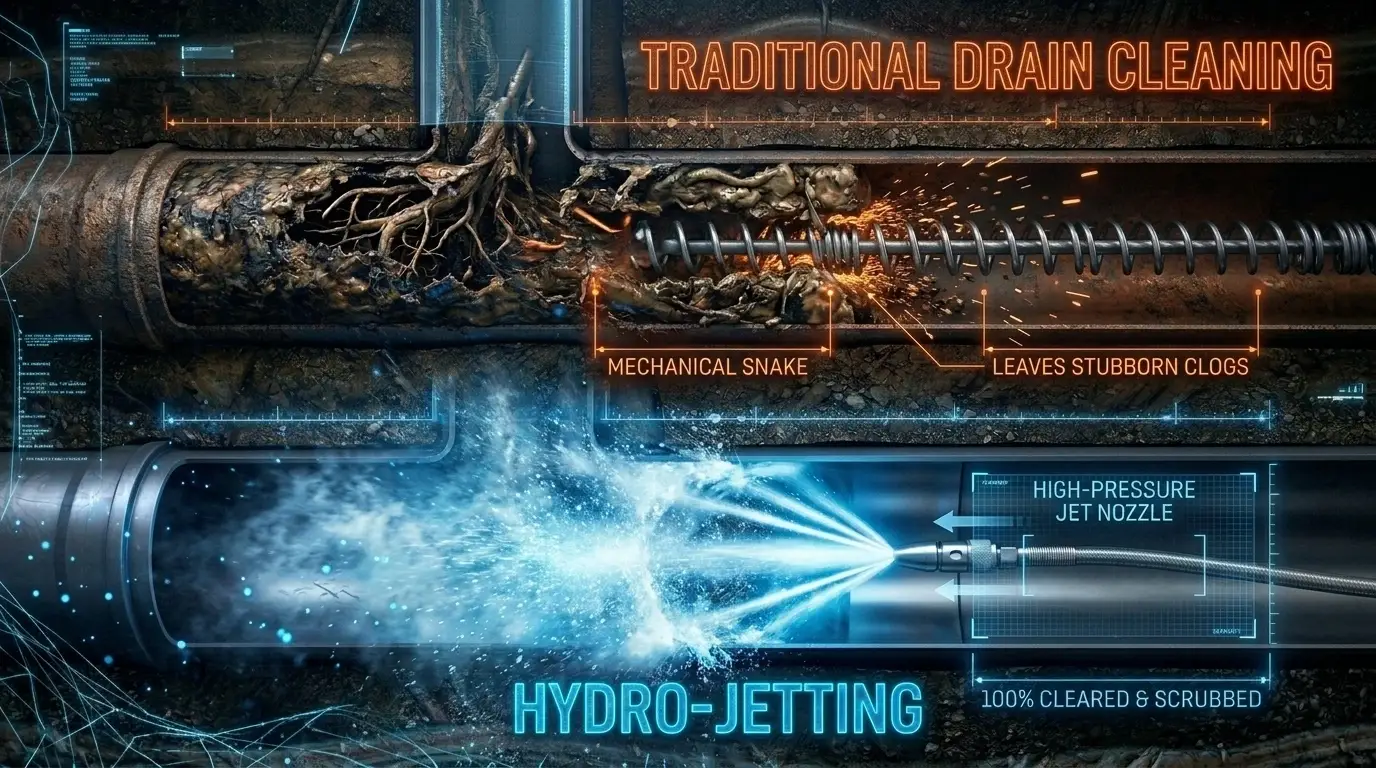
A drain snake is a long, flexible cable with a cutting or grabbing head. The plumber feeds it into the pipe and turns it. The head breaks up the clog or hooks it so it can be pulled out. Water can then flow again.
What Is the Difference Between a Drain Snake and an Auger?
The two terms overlap. A drain snake usually means a longer cable for sinks, tubs, and main lines. A drain auger is often a shorter, hand-cranked tool, like a toilet auger. Both use a rotating head to remove an obstruction.
Strengths and Limits of Traditional Drain Cleaning
Snaking is fast and costs less up front. It works well on hair, paper, and small objects near the drain. The limit is that it opens a path but does not scrub the pipe walls. Grease, soap scum, and mineral scale stay behind and can trap new debris.
What Is Hydro-Jetting?
Hydro-jetting cleans a drain with high-pressure water instead of a cable. A trained plumber runs a hose with a special nozzle into the line. The water clears the clog and washes the pipe wall at the same time.
How Does the Hydro Jetting Process Work?
The plumber often starts with a sewer camera to see the pipe. Then the hose goes in through a cleanout. Jets on the nozzle pull the hose forward and spray the walls. Loosened debris flushes downstream. Many machines run between 1,500 and 4,000 psi, but a good plumber sets the pressure to fit the pipe.
What Can Hydro Jetting Remove?
It removes grease buildup, sludge, soap scum, and hard-water scale. With the right nozzle, it also cuts tree roots in a sewer line. It cannot repair cracks or a collapsed pipe.
Strengths and Limits of Hydro-Jetting
Hydro jetting cleans the whole pipe wall and uses water instead of chemical drain cleaners. It usually costs more than snaking. It also takes skill and a pipe in good shape. High pressure can hurt a weak or cracked line.
Hydro-Jetting vs. Traditional Drain Cleaning: Key Differences
Traditional drain cleaning and hydro-jetting have different goals. A drain snake clears one blockage so water can flow again. Hydro jetting clears the clog and also washes the pipe wall. That difference drives most of the others.
The tools are different too. Traditional drain cleaning uses a plunger, snake, or auger. Hydro-jetting uses a jetting machine, a hose, and a nozzle. The jetting setup needs more training and more time to run.
Each method fits different clogs. Snaking suits fresh, simple clogs like hair and soap near the drain. Hydro jetting suits grease buildup, scale, roots, and repeat clogs. Neither method is always better.
Cost and pipe checks also differ. Snaking costs less up front and often needs no camera check. Hydro jetting usually costs more, and a sewer camera inspection is strongly advised first. Neither method uses chemical drain cleaners.
Neither method is always better. Snaking fits a single, fresh clog. Hydro jetting fits buildup that keeps coming back. The right pick depends on the type of blockage, where it sits, and the condition of the pipe.
When Should You Choose Traditional Drain Cleaning?
A drain snake suits a first-time clog in one sink, tub, or shower. Hair and soap clogs near the drain are typical. A plumber can clear these quickly and at a lower cost.
Snaking also helps when something falls down the drain. A ring or a toy can often be hooked and pulled back. Hydro jetting would not help in that case.
It can also be a safe first step when pipe condition is unknown. A snake puts less pressure on the pipe. If the clog returns, ask for a camera check before trying anything stronger.
When Is Hydro-Jetting the Better Choice?
For Recurring Drain Clogs
If a drain clogs again soon after snaking, buildup may be coating the pipe. Hydro jetting cleans that coating. It can address the cause and not just the symptom. Results still depend on pipe condition and what goes down the drain.
For Heavy Grease and Sludge
Kitchen lines collect grease buildup over time. A snake only pokes a hole through it. Hydro jetting washes the walls, which is why it suits restaurant drains and busy home kitchens.
For Sewer Lines With Root Intrusion
A root-cutting nozzle can cut roots and flush them out. Roots often enter through small cracks, though. If the crack stays, the roots can grow back, and the sewer line may need repair.
For Preventive Drain Maintenance
Some lines do better on a cleaning schedule. Restaurant drains and rental buildings are common examples. A planned visit usually costs less than an emergency backup. The right schedule depends on the line’s history.
Is Hydro-Jetting Safe for Older Pipes?
Why Pipe Material and Condition Matter
Old clay, cast iron, and patched pipes can be fragile. Cracks and shifted joints may not handle strong pressure. Modern PVC usually handles hydro-jetting well. The plumber should match the pressure to the pipe.
When to Schedule a Sewer Camera Inspection
Book one before jetting an older line. It also helps after repeat clogs or when several drains back up together. The camera shows the clog, any roots, and any damage. You get a clear picture before you choose.
When Repair or Replacement May Be Needed Instead
Hydro jetting cleans pipes. It does not fix them. If the camera shows a broken or collapsed sewer line, repair comes first.
Hydro Jetting vs. Drain Cleaning Cost
What Affects the Cost of Traditional Drain Cleaning?
Clog severity, location, and the tool needed all matter. A sink clog costs less than a deep main-line clog. After-hours calls often cost more.
What Affects the Cost of Hydro-Jetting?
Line length, access, buildup, and equipment set the price. A camera inspection may add to it. Heavy grease or scale can also mean more time.
Which Method Offers Better Long-Term Value?
Think about cost per year, not cost per visit. If you snake the same drain again and again, those visits add up. For a single, fresh clog, snaking is the smarter spend. Ask for a written quote and what it includes.
Drain Cleaning in Chino: What Local Property Owners Should Know
Chino sits in the Inland Empire, where water is often hard. Hard-water scale can narrow pipes over time. Older neighborhoods also tend to have mature trees, so roots can reach sewer lines.
Homes and Rental Properties
Landlords and property managers feel repeat clogs the most. Each one means another tenant call. Keep a simple record of each clog and fix. If the same unit calls twice, ask for a camera check.
Restaurants and Commercial Properties
Commercial kitchens send grease down the drain every day. Grease traps need regular pumping, and local rules may apply. Pairing trap service with scheduled hydro jetting keeps commercial drain cleaning predictable. Ask for visits outside business hours.
Emergency Drain Cleaning
Call right away if sewage backs up or floor drains overflow. Gurgling in several drains at once is another warning sign. Stop using water until help arrives. An emergency visit restores flow first, and a camera check can follow.
Drain Opening Tips Before You Call
Start with a plunger. A cup plunger works on sinks and tubs. A flange plunger works on toilets. This often clears a simple clog.
Skip chemical drain cleaners. They can harm some pipes and irritate skin. They can also sit in the pipe and make a plumber’s job harder.
Prevent the next clog. Use a drain strainer in showers and sinks. Wipe grease from pans into the trash. Leave hydro-jetting to professionals, since the equipment can cause serious injury.
How to Choose the Right Drain-Cleaning Method
Identify the Type of Blockage
Hair and soap usually point to a bathroom clog. Grease points to the kitchen. Slow drains in many fixtures suggest a main sewer line problem.
Consider How Often the Drain Clogs
One clog is an event. Repeat clogs are a pattern. A pattern often means buildup, and that favors hydro jetting.
Check the Condition of the Pipe
Older pipes call for care. A camera inspection tells you if the line can take high pressure. Skip this step and you risk avoidable damage.
Compare the Total Cost and Expected Results
Ask what is causing the clog and what the quote covers. Ask if a cheaper first step makes sense. An honest plumber will explain why they suggest one method over another.
Frequently Asked Questions
Is hydro-jetting better than traditional drain cleaning?
Not always. Hydro jetting is better for buildup and repeat clogs. Traditional drain cleaning is often enough for a simple, fresh clog.
Is hydro-jetting more expensive than drain snaking?
Usually, yes. Hydro jetting needs more equipment and time. It can still save money if it stops repeat visits.
Can hydro-jetting damage pipes?
It can, if the pipe is cracked or weak. A camera inspection lowers that risk. A trained plumber also sets pressure to fit the pipe.
Does hydro jetting remove tree roots?
It can cut and flush roots with the right nozzle. It does not seal the crack they came through. Without a repair, roots may return.
How long do hydro-jetting results last?
There is no fixed time. Results depend on the cause of the clog, pipe condition, and what enters the drain. Your plumber can suggest a schedule based on your line.
Can I use a drain snake before calling a plumber?
A small hand snake can work on a sink or tub clog. Stop if it will not move or the clog keeps returning. Pushing harder can damage the pipe.