5 Signs Your Drains Need Professional Cleaning
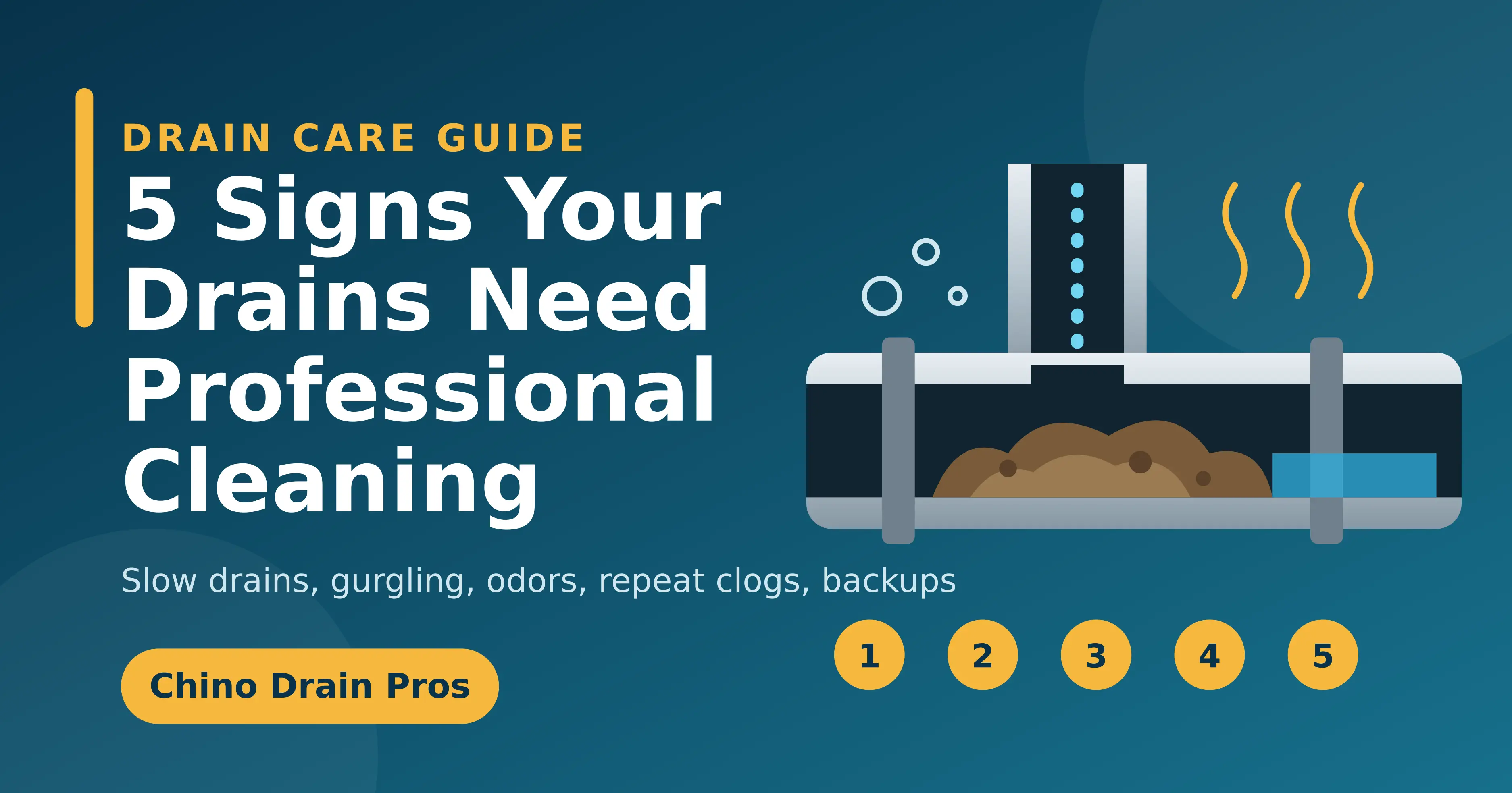
A drain that empties slower than it did last year is the earliest sign of buildup inside your pipes. Grease, hair, soap scum, and food scraps stick to the inner wall of a pipe and shrink the opening a little more each week. You rarely notice this because the pipes sit inside your walls and under your floors. Most Chino homeowners find out only when a kitchen sink holds standing water.
A narrowed pipe does not stay a small problem. Each new load of wastewater catches on the existing buildup, which makes the blockage thicker and faster growing. Once the opening closes, water backs up through the lowest fixture in the house, often a shower or floor drain. A sewage backup damages flooring, grows mold, and costs far more to fix than a cleaning.
The five signs below show when buildup has outgrown a plunger. Each sign points to a specific location and type of blockage, so you can tell what is happening inside the pipe. By the end, you will know which signs allow a quick fix at home and which ones need a technician today.
How Your Home’s Drains Work in One Minute
Every sink, shower, and toilet connects to a branch line, and the branch lines join one main sewer line. The main sewer line carries wastewater out of your home to the city sewer. A blockage in a branch line affects one fixture, while a blockage in the main sewer line affects the whole house.
Each fixture also has a P-trap, the U-shaped bend under a sink. The P-trap holds a plug of water, and that water stops sewer gas from rising into the room. If the water evaporates, the gas escapes through the drain.
A vent pipe runs from your plumbing up through the roof. The vent lets air flow in behind draining water, the same way a second hole in a juice can lets juice pour smoothly. Branch lines, P-traps, and vent pipes explain all five signs below.
Sign 1: Several Drains Run Slowly at the Same Time
Slow drainage in more than one fixture points to buildup in a shared line. A single slow sink usually has a clog in its own short branch line. When the shower, bathroom sink, and washing machine all drain slowly, the shared line is narrowing. Hair, grease, soap scum, and mineral scale cause that narrowing.
Hard water speeds up the problem because it leaves mineral scale on the pipe wall. Water across Southern California’s Inland Empire is generally hard, which means it carries dissolved calcium and magnesium. Those minerals form a rough crust, and the rough surface catches hair and grease more easily than smooth pipe.
A simple test shows which case you have. Fill one sink halfway, release the plug, and run the shower at the same time. If both slow down, the blockage sits in a shared line rather than in one fixture.
Sign 2: Gurgling Sounds After Water Drains
Gurgling means air is being forced through water that has a blockage behind it. When draining water meets a partial clog, the water cannot move forward, so air gets pushed back through the P-trap and bubbles up. A blocked vent pipe produces the same sound because air cannot enter behind the draining water.
The location of the gurgle tells you where to look. Gurgling in a toilet when the sink drains suggests a blocked main sewer line, because the toilet and the sink share that line. Gurgling in one fixture only suggests a clog in that fixture’s branch line or a blocked vent. Write down which fixture gurgles and when, because a technician can use that pattern to find the blockage faster.
Sign 3: Persistent Odors or Drain Flies
A persistent drain odor means organic waste is rotting inside the pipe or the P-trap has lost its water seal. Bacteria feed on the grease and food film lining the pipe and release hydrogen sulfide, the gas that smells like rotten eggs. Air freshener only masks the smell, while the film keeps growing.
Check the P-trap first. A rarely used fixture, such as a guest bathroom sink or a garage floor drain, can lose its water plug through evaporation. Pour a pint of water down that drain, and if the smell returns within a day or two, buildup is the cause rather than a dry trap.
Drain flies give a second warning. These small, fuzzy-winged insects lay eggs in the slimy film inside drains, so a group of them around a sink means that film is thick. Killing the flies does not remove the film, so they return until a professional cleaning clears it.
Sign 4: The Same Clog Keeps Coming Back
A clog that returns means the cause sits deeper or covers more pipe than the spot you cleared. A plunger or chemical cleaner opens a narrow channel through the center of a clog, but the buildup on the pipe wall stays in place. New waste catches on that leftover buildup, and the clog re-forms within weeks.
Chemical drain cleaners add a second problem. Products made with lye or sulfuric acid produce heat as they react, and that heat can soften PVC pipe and corrode older metal pipe. They also leave caustic liquid in the line, which can burn the skin and eyes of the technician who opens the pipe later.
Tree roots cause many repeat clogs in underground sewer lines. Roots grow toward moisture, so they push through tiny cracks and loose joints in the pipe. Once inside, roots catch toilet paper and waste, and they regrow after each simple clearing. A camera inspection shows whether roots are the cause.
Sign 5: Water Backs Up Into a Different Fixture
Water appearing in a fixture you did not use means the main sewer line is blocked, and this sign is urgent. The bathtub may fill with gray water when the washing machine drains, or the toilet may bubble when you run the kitchen sink. All branch lines join the main sewer line, so blocked wastewater exits through the lowest fixture in the house.
Stop using water in the house as soon as you see a backup. Every extra gallon pushes more wastewater toward the blockage and into your home. Sewage carries bacteria, so keep children and pets away, and remember that mold can start growing on wet materials within 24 to 48 hours.
Check outside as well. Many homes have a cleanout, a capped pipe in the yard that gives plumbers access to the main sewer line. Water or sewage pooling around the cleanout cap confirms a main line blockage.
What a Professional Drain Cleaning Involves
A technician usually starts with a camera inspection. The camera is a waterproof lens on a flexible cable, and it shows the inside of the pipe on a screen. This step reveals whether the blockage is grease, roots, a foreign object, or a damaged pipe, so the cleaning method fits the cause.
Next, the technician chooses between a drain snake and hydro jetting. A drain snake, also called an auger, is a rotating steel cable that breaks through or pulls out a clog. Hydro jetting uses high-pressure water to scrape the full pipe wall, which removes grease, scale, and small roots that a snake can leave behind.
How Often Should You Clean Your Drains?
A general guideline is one professional cleaning every one to two years. Kitchen lines carry grease, so households that cook daily may need cleaning closer to once a year. Older homes with cast iron or clay sewer pipes, and homes with mature trees near the sewer line, benefit from a yearly camera inspection because rough old pipe and roots both invite blockages.
Daily habits stretch the time between cleanings. Drain screens catch hair, a jar collects cooking grease so it never enters the sink, and the trash can takes wipes. “Flushable” wipes do not break down like toilet paper, so they gather in pipes and form blockages.
When to Call Chino Drain Pros
Call a professional when you notice two or more signs, when a clog returns after plunging, or when water backs up into any fixture. Chino Drain Pros finds the cause of the blockage first, then clears the line with the method that fits it. You can reach us at (909) 737-6120 or find us at 13600 Central Ave, Chino, CA 91710.