What Is Drain Cleaning? A Complete Homeowner's Guide
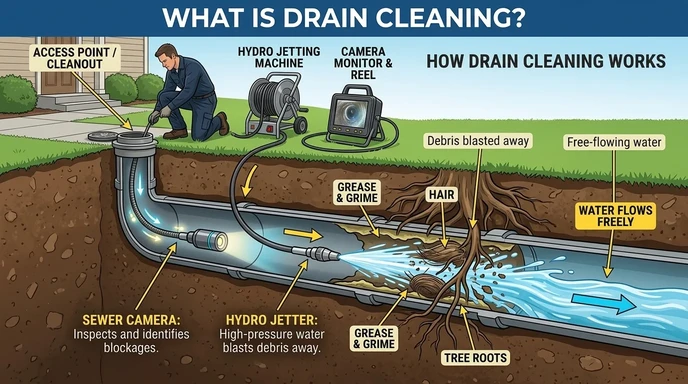
A drain that smells like sewage, gurgles, or empties slowly is a sign that something is wrong inside your pipes. Drain cleaning is the process of removing the buildup and blockages that restrict wastewater flow and trap odors in your home's drainage system. Most Chino homeowners first notice the problem as a faint smell that comes and goes.
Ignored drain problems rarely stay small. Grease, hair, and debris keep collecting, which narrows the pipe and gives bacteria a steady food source, so the smell returns no matter how often you freshen the air. A partial clog can become a full backup, which exposes your family to wastewater and can cause costly water damage. For landlords and property managers, one neglected drain can quickly become a tenant complaint and an expensive repair.
The good news is that most drain odors have a clear cause and a safe fix. This guide explains how your drains work, what causes clogs and smells, which cleaning methods fit which problems, and when to call a professional. By the end, you will know how to remove the smell and keep it from coming back.
What Is Drain Cleaning?
Drain cleaning is the removal of the debris, grease, and mineral buildup that collects on the inside of your drainpipes. It works by clearing the material that blocks water and by scrubbing or flushing the pipe walls where residue sticks. Because that residue is what causes both slow drainage and bad odors, cleaning the pipe addresses the smell at its source.
What Is the Difference Between Drain Cleaning and Drain Clearing?
Drain clearing removes a single blockage, while drain cleaning removes the buildup lining the whole pipe. Clearing is like poking a hole through a clog so water can pass again. Cleaning goes further, so the leftover residue does not rebuild the clog and keep feeding odor-causing bacteria. When a clog keeps returning, clearing alone is usually not enough.
How Does Your Home Drainage System Work?
Your home's drainage system is a network of pipes that carries used water from every fixture to the sewer or septic connection. Each sink, shower, tub, and toilet connects to a smaller branch pipe, and those branches join a larger main drain line. The main line leads out of your home and into the city sewer. A clog anywhere along this path can slow every fixture connected downstream of it.
Two parts of this system matter most for odors. The P-trap is the curved section of pipe under a sink or tub that holds a small amount of water, and that water forms a seal against sewer gas. Vent pipes run up through your roof and let air into the system, which keeps water moving smoothly and keeps the P-trap seal intact. If a trap dries out or a vent is blocked, sewer gas can enter your home even when no pipe is clogged.
This is why a bathroom can smell like sewage when nobody has used it. A seldom-used shower or floor drain loses its trap water through evaporation, which removes the seal and lets gas rise into the room. Running water in that drain for a minute often restores the seal. If the smell returns quickly, the cause is likely deeper in the pipes.
What Causes Clogs and Drain Smells?
Most clogs form when something sticks to the inside of the pipe and traps more material behind it. Each cause below behaves differently, which is why the right cleaning method depends on what is in the pipe.
• Hair and soap scum build up in bathroom drains. Soap makes the pipe wall sticky, hair catches on it, and the mass slowly narrows the opening.
• Grease and cooking oil cool and harden inside kitchen drainpipes. They coat the walls and catch food particles, which then decompose and create a rotten smell.
• Food scraps from a garbage disposal add to that layer, especially when fibrous foods such as celery or potato peels are ground up.
• Mineral scale forms as hard water leaves deposits inside pipes. Hard water is common in the Inland Empire, and scale gives hair and grease a rough surface to cling to.
• Foreign objects such as wipes, cotton swabs, and paper towels do not break down, so they lodge in bends and joints.
• Tree roots and damaged pipes affect underground lines. Roots enter through tiny cracks and joints, and they catch debris, which causes repeat clogs and persistent sewer odors outdoors or in the yard.
What Are the Signs Your Drains Need Cleaning?
The earliest sign of a drain problem is usually water that moves slower than it used to. Slow drainage means buildup is narrowing the pipe, and a narrower pipe catches more debris. If you treat it at this stage, cleaning is simple and inexpensive.
Other signs point to specific problems. Gurgling sounds mean air is being forced through water because a clog or blocked vent is restricting flow. A lingering foul odor means decaying residue is sitting in the pipe or a trap seal has failed. Frequent clogs in the same drain suggest buildup deeper in the line that surface clearing never removed.
The number of affected drains is your best clue to where the problem sits. If only one drain is slow or smelly, the issue is probably local to that fixture, such as a hair clog or a dry trap. If several fixtures slow down, gurgle, or back up together, the blockage is probably in a shared branch or the main sewer line. These are clues rather than a firm diagnosis, but they help you decide how urgently to act.
What Are the Different Drain Cleaning Methods?
Different methods suit different blockages, so choosing the right one depends on what is causing the problem and how far into the pipe it sits. The table below compares the most common options.
| Methods | Best For | Advantages | Limitations |
|---|---|---|---|
| Plunging | Minor clogs in a sink, tub, or toilet | Inexpensive and quick | Does not clean pipe walls or reach deep clogs |
| Drain snaking | Hair, soft obstructions, nearby clogs | Breaks up or pulls out the blockage | Can leave residue behind |
| Mechanical auger | Stubborn or deeper clogs, main lines | Reaches farther with more power | May not remove grease coating |
| Hydro-jetting | Grease, scale, and heavy buildup | Washes pipe walls with high-pressure water | Needs a professional and a sound pipe |
| Camera inspection | Recurring clogs and unknown causes | Shows the blockage, roots, or cracks | Finds the problem but does not clear it |
| Enzyme products | Light, routine maintenance | Gentle on pipes | Too slow for real blockages |
A drain snake is a flexible cable that is pushed into the pipe to break up or hook a clog. Hydro-jetting uses pressurized water to scrub the inside of the pipe, which is why it works well on grease and scale. A sewer camera inspection sends a small waterproof camera through the line so a technician can see exactly what is wrong. Professionals often combine these tools, such as snaking first and jetting afterward, so the pipe is both cleared and cleaned.
DIY Drain Cleaning vs. Professional Drain Cleaning
You can safely handle minor, nearby clogs yourself, but deeper or repeating problems need a professional. A plunger, a hair catcher, and a small hand snake will resolve many shower and bathroom sink clogs. These tools work because the blockage is close to the drain opening and made of soft material. When one fixture is slow and nothing else is affected, a DIY attempt is reasonable.
Home remedies have limits. Baking soda and vinegar can freshen a drain and loosen light residue, but they cannot dissolve a serious obstruction. Chemical drain cleaners are riskier, because they can irritate skin and lungs, damage some older pipes, and sit in a standing clog without clearing it. Never mix cleaning products, since some combinations release toxic gas, and always follow the label directions.
Stop DIY attempts when the problem repeats, affects more than one fixture, or comes with sewage odors, backups, or gurgling. At that point, the cause is likely in a shared pipe you cannot reach. A professional can diagnose the pipe's condition, choose a method that will not damage it, and confirm the result. Pushing harder with chemicals or force often turns a small problem into a repair.
What Happens During a Professional Drain Cleaning?
A professional visit follows a clear sequence so the cause is found before the cleaning begins. Knowing the steps helps you understand what you are paying for.
1. Assess the problem. The technician asks about symptoms, which fixtures are affected, and how long it has been happening.
2. Identify the blockage. They check the fixtures and, if needed, use a camera to locate the clog and look for roots or damage.
3. Choose the method. The pipe material, its age, and the type of blockage decide whether snaking, augering, or hydro-jetting is safest.
4. Clear and clean the pipe. The blockage is removed, and the pipe walls are cleaned where buildup remains.
5. Test the results. Running water through the line confirms it flows freely, and a camera can verify the pipe is clean.
6. Recommend next steps. If the pipe is cracked, shifted, or full of roots, the technician explains whether repair is needed.
How Often Should Home Drains Be Cleaned?
How often drains need cleaning depends on how heavily they are used and whether they have clogged before. A kitchen drain that handles grease and food waste needs more attention than a guest bathroom. Homes with large families, older pipes, mature trees, or a history of clogs benefit from more frequent care.
For most homes, a monthly habit of flushing drains with hot tap water and cleaning strainers is enough for routine upkeep. Many homeowners schedule a professional cleaning or inspection when they notice recurring clogs or odors, rather than on a fixed calendar. Rental properties often benefit from a yearly check, since a problem found early costs far less than an emergency call between tenants.
How Much Does Professional Drain Cleaning Cost?
The cost of drain cleaning depends on the problem, so a firm price is only possible after a technician sees the pipe. A simple clog in a sink usually costs less than a blockage in the main sewer line. Price also changes with how hard the pipe is to reach, how long the work takes, and which equipment is needed.
Hydro-jetting and camera inspections generally cost more than basic snaking because they use specialized equipment. They can still save money when they find and fix the cause of a repeating clog. Before you hire anyone, ask what the quote includes, whether a camera inspection is recommended, and what happens if the pipe needs repair. You can read more about our drain cleaning services to see how we explain pricing.
How Can You Prevent Clogged Drains and Recurring Smells?
Prevention works because it stops the buildup that causes both clogs and odors. Small daily habits protect your pipes far more than occasional deep cleaning.
• Pour cooled grease into a container and throw it away, because grease hardens inside pipes.
• Use sink strainers and shower hair catchers to keep solids out of the drain.
• Flush only toilet paper, since wipes labeled "flushable" often do not break down.
• Run cold water while using the garbage disposal and avoid fibrous or starchy scraps.
• Run water in rarely used drains every week or two to keep the P-trap sealed.
• Clear leaves and debris from outdoor drains so they do not wash into the line.
When Is a Clogged Drain an Emergency?
A clogged drain becomes an emergency when wastewater is coming back into your home. Sewage backing up through a floor drain, tub, or toilet is a health risk because it can carry bacteria. Several fixtures backing up at once usually mean the main line is blocked, and an overflowing outdoor cleanout points to the same problem.
While you wait for help, stop using water in the house, keep children and pets away from any wastewater, and avoid using chemical cleaners. If you smell rotten eggs or gas, leave the house and call your gas company, because that odor can signal a gas leak instead of a drain problem. For urgent backups, our team offers emergency drain cleaning.
Frequently Asked Questions About Drain Cleaning
Why does my bathroom smell like sewage when it's not being used?
The most common reason is a dry P-trap, which lets sewer gas rise into the room. Water in the trap evaporates when a drain goes unused for weeks, and the missing water removes the seal. Run water down the drain for a minute to refill it. If the smell returns, a blocked vent or buildup further down the line may be the cause.
Will pouring bleach down the drain fix the smell?
No, bleach usually only masks the smell for a short time. It does not remove the grease, hair, or residue that is producing the odor. Bleach can also react dangerously with other cleaners, releasing toxic gas. Cleaning the pipe itself is a safer and longer-lasting fix.
Why does only one drain in my house smell bad?
A smell from a single drain usually means the problem is local to that fixture. The likely causes are a dry trap, a hair and soap clog, or residue on the fixture's overflow or drain walls. A cleaning of that drain often solves it. If the odor persists after cleaning, a plumber should check for a deeper issue.
How do I know if the smell comes from a clog or from my main sewer line?
Look at how many fixtures are affected. A smell or slow drain in one place suggests a local clog, while odors, gurgling, or backups in several fixtures point to the main line. Outdoor sewage smells or soggy ground near the line are additional warning signs. A camera inspection confirms the cause.
Is professional drain cleaning safe for older pipes?
Yes, when the technician matches the method to the pipe's condition. Older or fragile pipes may call for a camera inspection first, so the plumber can see any cracks before using pressure. Gentler tools can be chosen if the pipe is weak. This is another reason to avoid harsh DIY methods in an older home.
Keep Your Drains Flowing With Professional Help
Drain cleaning removes the buildup that causes slow drains, gurgling pipes, and sewer smells, and keeping that buildup away is the key to stopping odors for good. Simple habits and minor DIY cleaning can handle small problems. If the smell keeps coming back or more than one drain is affected, the cause is probably deeper in the pipes.
If you would like a clear answer, Chino Drain Pros can inspect your drains and explain your options with no pressure. Learn more about our professional drain cleaning services whenever you are ready.